Celebrating Women Leading Today’s EconomY
International Women’s Day is more than a date on the calendar. It is a recognition of the people who are reshaping economies, redefining leadership, and proving, every day, that progress accelerates when women have space, support, and authority to lead. Across the globe, women are showing that growth does not come from programs or slogans. It comes from power. It comes from confidence. It comes from opportunity meeting preparation.
McKinsey’s latest research captures this global shift. Women are not falling behind. They are pushing forward despite challenging systems, uneven access, and the rapid pace of economic change.
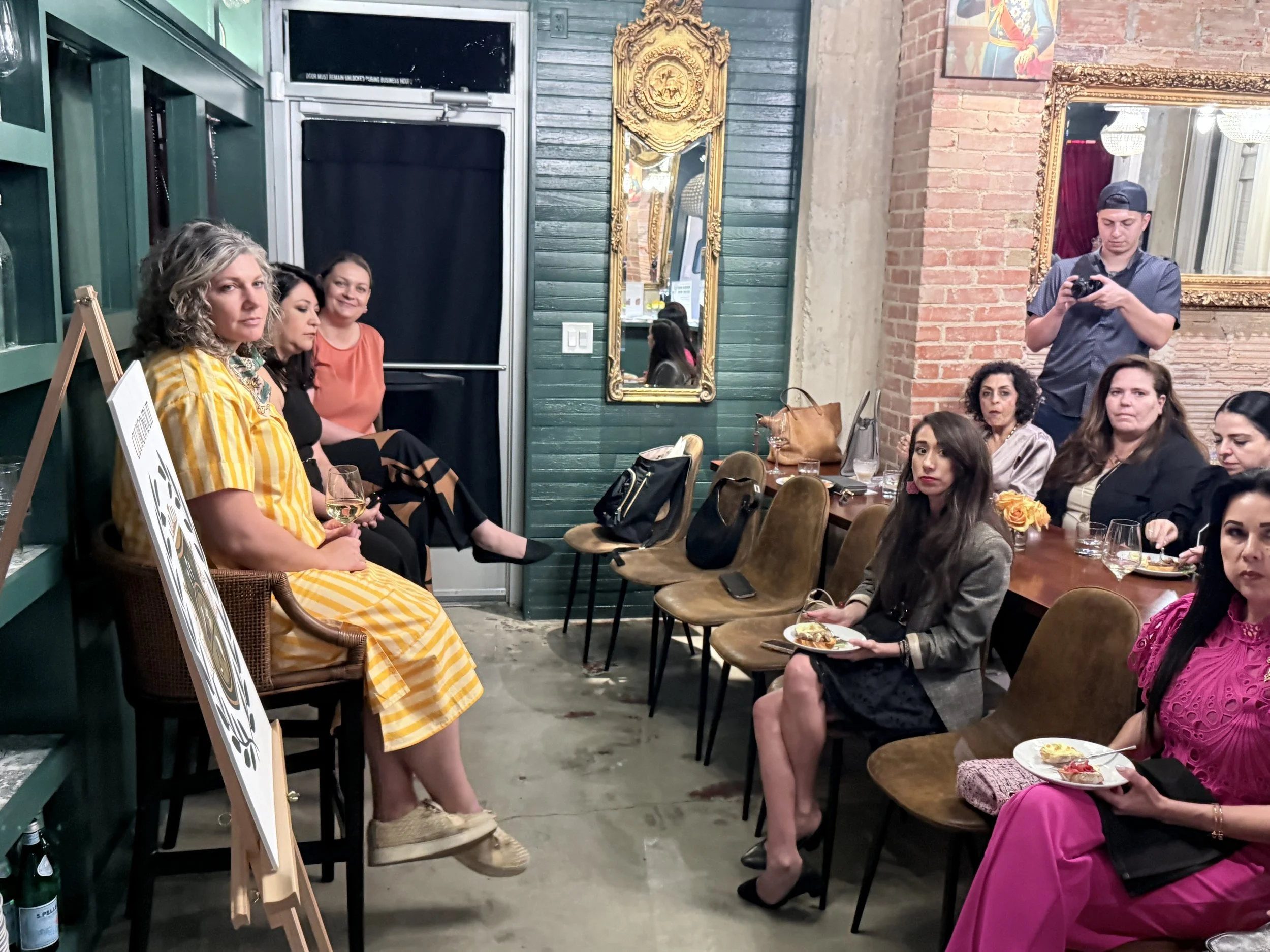
Club Conduit Salon Series for Women Leaders with Elizabeth Eichhorn, Meliza Brecht, and Lina
Today is a moment to acknowledge what is already true: women are driving the future of work.
Globally, Women Are Leading Through Change
Across global markets, women are launching companies, leading teams, and navigating uncertainty with a level of clarity that stands out in volatile environments. They are entering sectors once dominated by large incumbents and bringing new approaches to innovation, customer insight, and operational design. McKinsey’s research on women CEOs finds a consistent pattern: they tend to make decisions with discipline, communicate expectations with precision, and adapt more readily when conditions shift. Their leadership is grounded, not reactive, which allows them to steer organizations through disruption with steadiness and confidence.
This rise is visible across continents. In emerging markets, women entrepreneurs are driving digital adoption and reshaping consumer businesses. In developed economies, they are taking on senior roles in finance, technology, healthcare, and logistics. Many are leading hybrid teams, global supply chains, and cross-border ventures where complexity is the norm. These women are not simply participating in global markets. They are reshaping them.
The momentum is tied to more than talent. Women build networks differently. They exchange information more openly, collaborate across disciplines, and rely on peer systems that strengthen resilience. These networks act as economic infrastructure—sharing market trends, mentorship, partnerships, and access to emerging opportunities. In periods of uncertainty, this collective approach becomes a strategic advantage.
This is why the global shift is not a question of whether women are ready for leadership. Women have been ready. Their performance makes that clear. What is changing now is the world’s recognition of their impact. Economies, investors, and institutions are beginning to understand what the data has shown for years: when women lead, organizations and communities benefit. The world is not pushing women forward. It is finally catching up to where they already stand.
Nationally, Women Are Starting Businesses at Historic Levels
The United States continues to experience elevated levels of business formation, and women are a driving force behind that trend. Recent federal data shows that new business applications remain well above pre-2020 averages, and women-owned firms account for a growing share of this activity. They are entering both traditional sectors—like retail, health, and professional services—and high-growth fields such as tech, logistics, digital commerce, and sustainability. Their businesses often begin with limited capital and fewer institutional connections, yet they scale through grit, deep market awareness, and the ability to spot shifts in consumer behavior before larger competitors do.
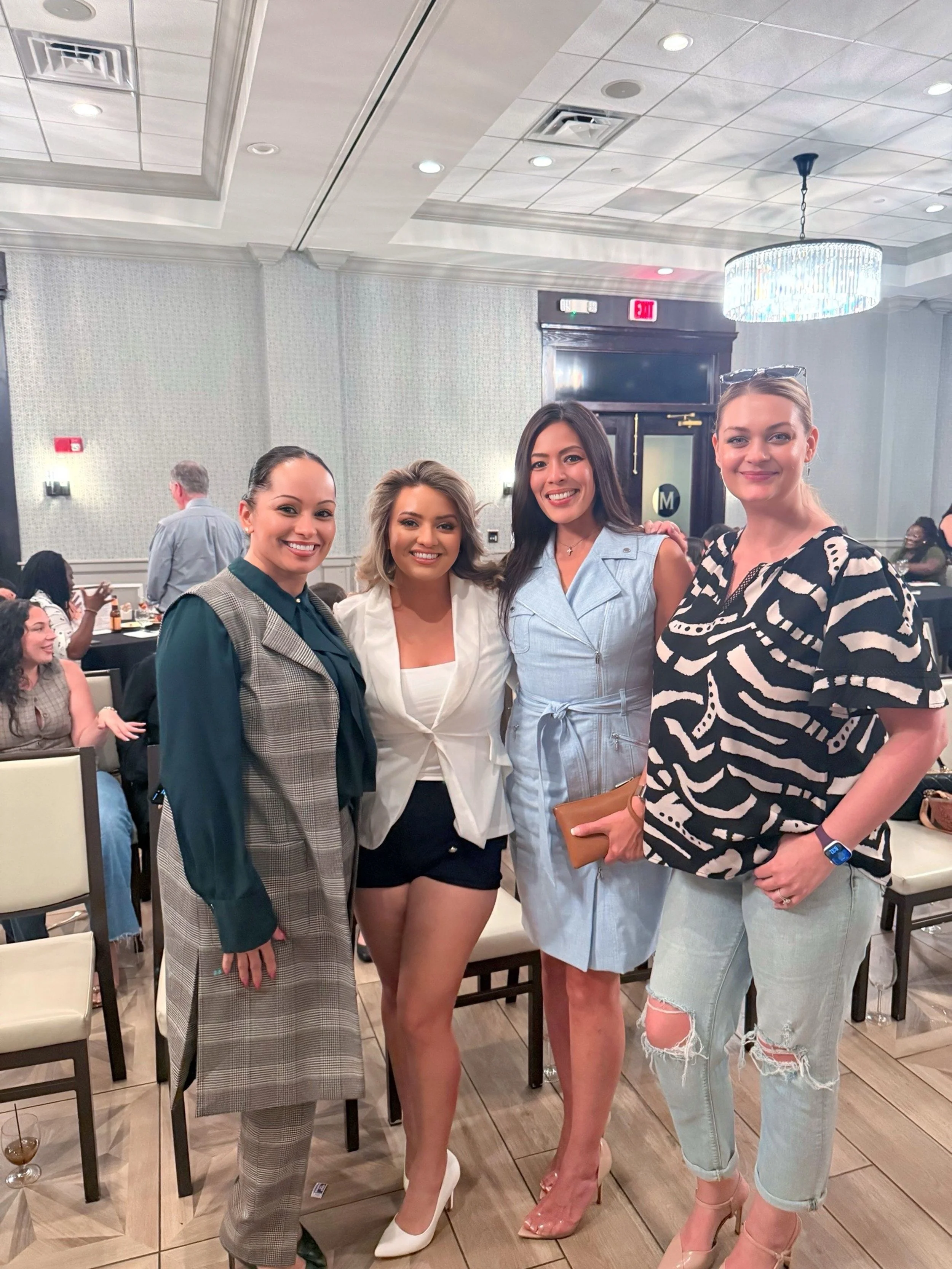

BriAnna Martinez’s Galentine Bash with Meliza Brecht, Hajar Moshirsadri, Lina & Christine
This growth is not accidental. It reflects the strength of women who build companies while balancing caregiving roles, community responsibilities, and structural barriers that their male counterparts are less likely to encounter. These founders operate with precision because they must. They design lean models, build loyal customer bases, and adapt quickly when markets shift. Their ability to turn constraints into strategy remains one of the most underrecognized competitive advantages in the U.S. economy.
National trends support this reality. The U.S. Census Bureau’s Business Formation Statistics show that new business applications have remained historically high since 2021, and women have been central to that surge.
Women-owned firms are expanding across retail, tech, personal services, digital commerce, and professional fields—areas where customer experience, flexibility, and community connection matter. Pew Research highlights steady growth in women-owned businesses nationwide, with notable expansion among Black and Latina entrepreneurs who continue to gain market share despite persistent funding and visibility gaps.
Texas reflects these national shifts. Women entrepreneurs are contributing significantly to the state’s elevated business formation rates, helping diversify markets and accelerate innovation in both traditional and emerging industries. SBA data confirms Texas remains one of the strongest environments for small business creation, driven in part by women who launch companies designed for modern consumer expectations.
National Women’s Day is a reminder that women do not need more talent or ambition—they already outperform. What moves them forward is encouragement, visibility, and systems that recognize value already being created. When women gain equitable access to capital, networks, contracting pathways, and technical support, their companies grow faster, scale stronger, and build long-term economic resilience.
Women founders are not asking whether they deserve space in the market. They are defining markets, creating new ones, and setting new standards for what entrepreneurship can look like across the United States. Their progress is not hypothetical. It is documented, measurable, and reshaping the national business landscape in real time.
Locally, Women Drive Community-Based Economic Strength
In cities like San Antonio and across South Texas, women-owned businesses are not side stories. They are economic anchors. According to the U.S. Small Business Administration, the San Antonio–New Braunfels region is home to more than 280,000 small businesses, representing over 99% of all firms in the metro area. These businesses employ 40.9% of the local workforce, a share that reflects the region's economic health and the essential role of small enterprises, and the women who run many of them.
Women-owned firms contribute heavily to this base. They employ workers, stabilize neighborhoods, and generate revenue that stays within the community. They operate retail shops, service companies, childcare centers, consulting firms, digital ventures, and hybrid models that fit the new economy. Their presence shapes the feel of local corridors, from the Southside to Stone Oak, and fills critical gaps in education, health, tech-enabled services, and consumer experience.
Greater:SATX data reinforces this point. The region’s economic performance depends on a diverse ecosystem of small and midsize enterprises—not just the large employers typically highlighted in relocation announcements. In fact, the industries central to the regional economy: healthcare, bioscience, professional services, logistics, and advanced manufacturing, rely heavily on small firms and subcontractors for their daily operations.
This is where women entrepreneurs hold significant influence. Their companies provide specialized skills, bilingual services, community-centered models, and friction-reducing solutions that larger firms often overlook. They understand local needs with precision. They design offerings with cultural awareness. They build trust in ways that drive both loyalty and long-term sustainability, two qualities increasingly valuable in an unstable economy.
The momentum is visible. Women in South Texas are turning lived experience and professional expertise into companies that respond faster, adapt quicker, and fill gaps that matter, from childcare capacity to digital education support to neighborhood retail. Each success story reinforces the next. Women see proof of possibility in their own community rather than in distant markets.
Local progress does not come from more theory or more generic training. It comes from visibility. It comes from women seeing other women open storefronts, scale service businesses, expand online, secure contracts, or grow into new phases of leadership. That recognition—she built something real here, so I can too—is one of the strongest economic catalysts any region can produce. And in San Antonio, it is reshaping the trajectory of the next generation of entrepreneurs.
The “Broken Rung” Doesn’t Define Women—It Defines the System
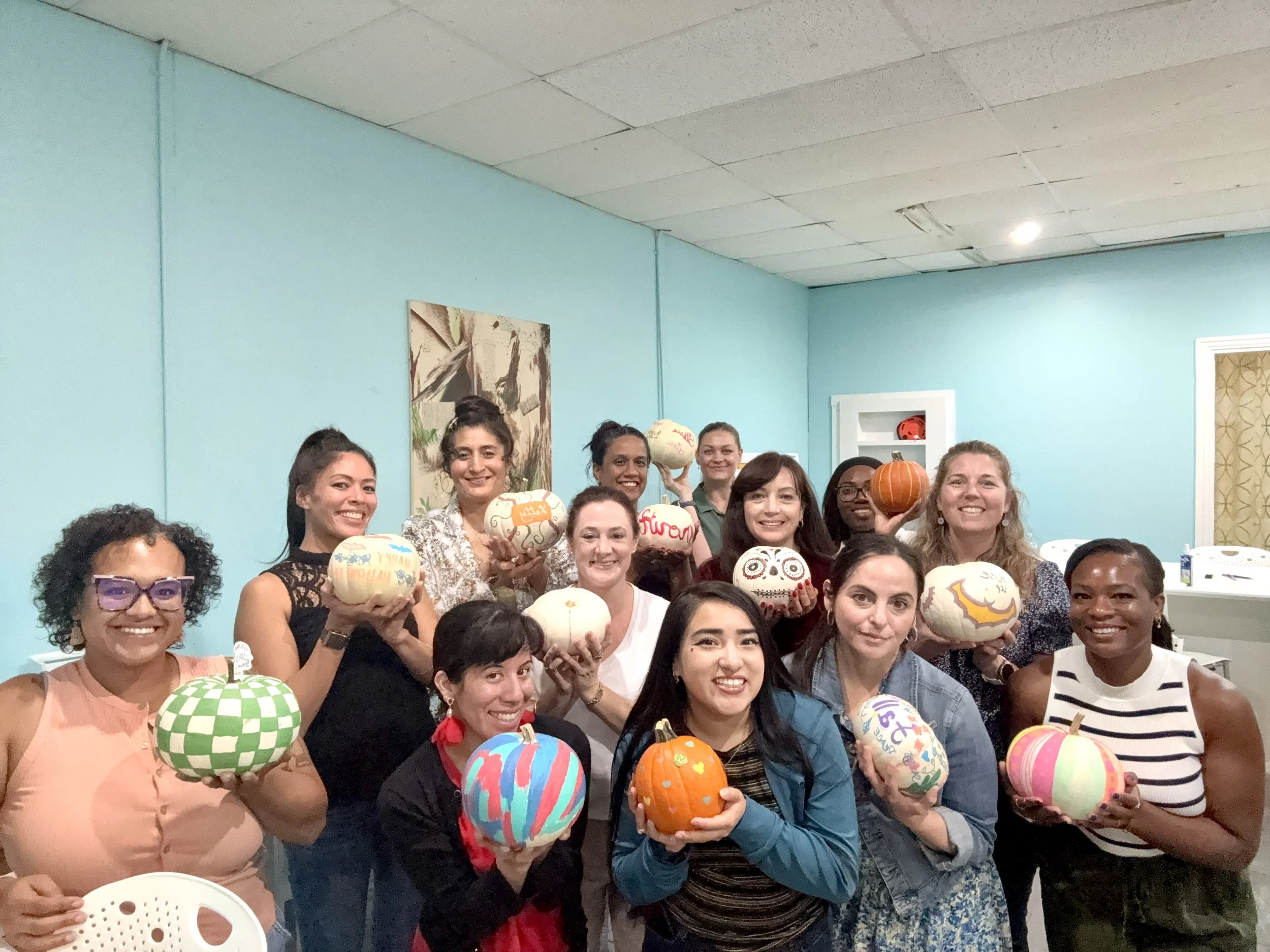
WINC Circle Event in October 2025
McKinsey’s research shows the first step into management remains the biggest barrier for women. That “broken rung” shapes long-term career trajectories more than any other stage. Yet focusing only on the barrier misses the more important story. The real takeaway is what women do next: they succeed anyway. They build careers in nontraditional ways, often outside the linear ladders that were never designed with them in mind. They step into entrepreneurship, where they control their own advancement. They transition across industries to find roles that value their leadership. They create opportunities instead of waiting for permission to advance.
This adaptability is strategic, not accidental. When pathways narrow, women redesign them. They learn to lead teams without titles, influence decisions without authority, and deliver outcomes in environments where their contributions are sometimes overlooked. They become experts in navigating ambiguity, building networks across sectors, and making progress in systems that reward predictability over change.
Women are not “waiting to be developed.” They are already developing themselves, their teams, their businesses, and their communities. They are navigating around outdated structures and creating new models for career mobility, models built on collaboration, resilience, and problem-solving. This is not a workaround or a backup plan. It is a competitive advantage.
In a landscape where industries shift quickly, organizations need leaders who can adapt without losing direction. Women have been doing exactly that for decades. Their ability to move forward in imperfect systems is not a sign of inequity alone. It is evidence of the leadership capacity that the modern economy now requires.
Women Don’t Need More Classroom Time—They Need Room to Lead
The narrative that women need more training, more mentorship, or more education ignores reality. Women already outperform in education at every level of attainment. They hold advanced degrees at higher rates than men. They demonstrate strong leadership competencies in communication, collaboration, and problem-solving. In many workplaces, they take on broader responsibilities and carry the invisible work that keeps teams functioning even when it goes unrecognized.
The gap is not in capability. It is access.
What they need is:
more decision-making authority
more visibility for their expertise
more invitations to closed rooms
and rooms that are built for women by women
more sponsorship from leaders who understand their vision
environments that recognize their value without requiring them to prove it twice
These are not developmental needs. They are structural needs. They shape whether women can advance, scale businesses, or secure the resources required to grow. When those supports are present, women move faster, innovate more, and create stronger organizational outcomes. When they are absent, women still advance — but they expend unnecessary energy navigating systems that were not designed with them in mind.
That is why encouragement is fuel. Access is infrastructure. Power is the outcome.
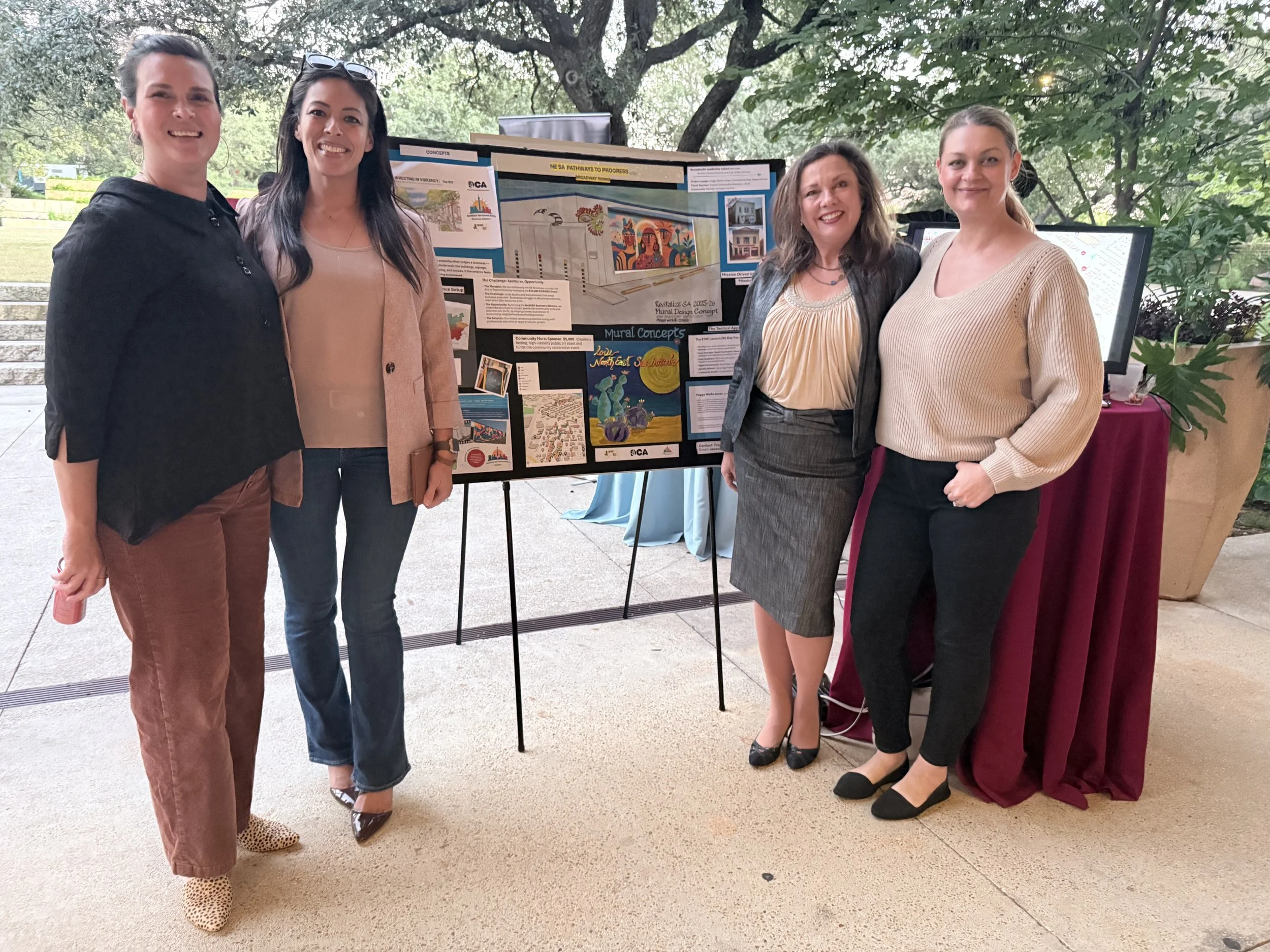
Revitalize SA Showcase with Peggy Wolfe-Jones, Pauline Rubio, Lina & Christine
Encouragement provides the psychological lift that validates ambition and signals that leadership is welcome, not exceptional. Access provides the tangible elements: capital, contracts, networks, opportunities, that convert ambition into action. And when these two forces converge, women gain the power to lead with authority, scale businesses with confidence, and influence industries that once felt out of reach.
This is not about fixing women. It is about fixing the systems around them so that the leadership they already possess can operate at full strength.
Emerge and Rise Celebrates the Women Who Make Progress Possible
As a women-led organization, we see every day how much women entrepreneurs contribute to San Antonio’s economic strength. They build ideas with courage. They run companies with discipline. They hold communities together with creativity and care.
International Women’s Day is not just a celebration for us. It is a reflection of what we witness all year—the brilliance, drive, and leadership of women who build our region’s future.
If you are a woman building a business, advancing your career, or stepping into leadership, support should meet your ambition. Emerge and Rise offers venture development programs, strategic guidance, and technical assistance designed to help women move from idea to impact with strength and confidence. Join us at WINC Circle and Club Conduit.

Your donations make our work possible.
When you give to Impact, you provide resources that transform the community.
Keep Reading